Demos
Demos  Colors
 Docs
Docs  Support







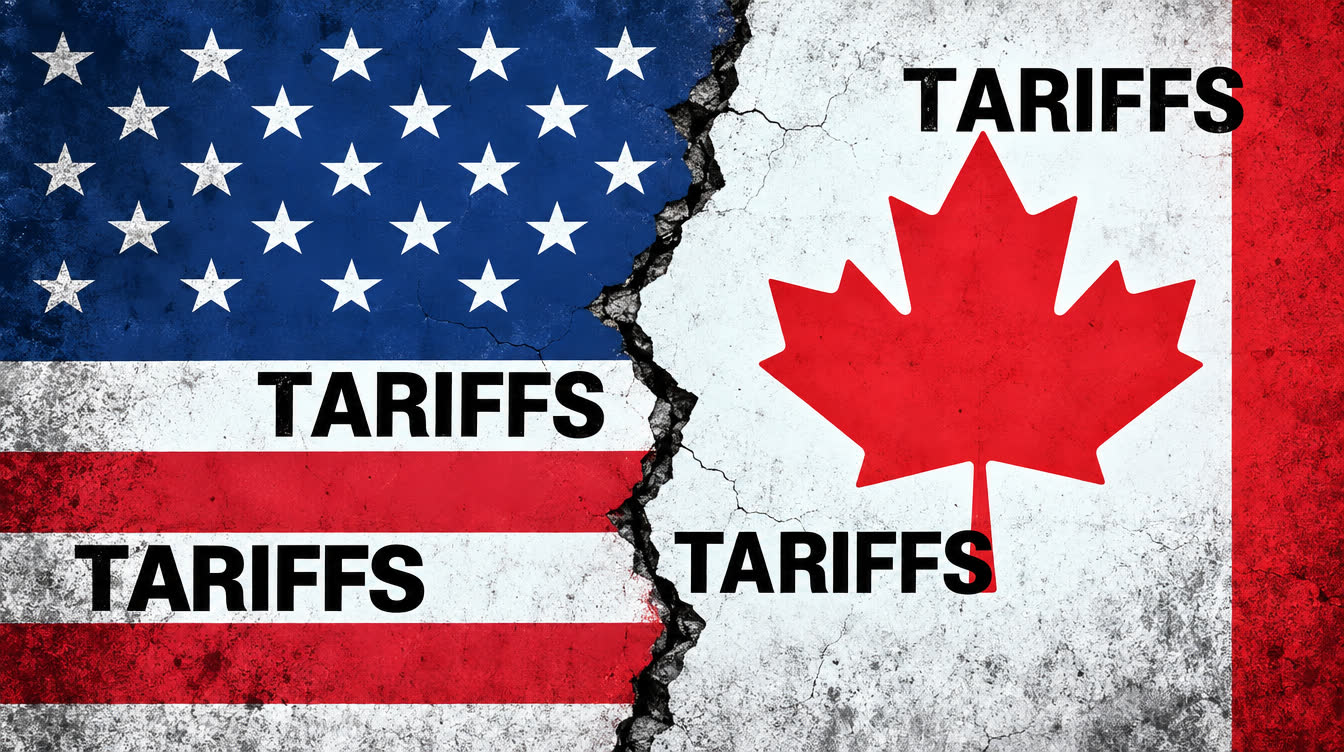
The two neighbours have moved from difficult negotiations to matching tariffs, import restrictions and a broader struggle over industrial independence.
Canada and the United States built one of the world’s most integrated trading relationships around the assumption that goods, components and investment could move across their border with limited friction. In 2026, that assumption is under severe pressure.
After bilateral negotiations failed in August, the United States imposed tariffs of up to 50% on C$27.6 billion worth of Canadian goods. Canada responded on 8 September with matching duties of 15%, 25% and 50% on more than 700 categories of American products.
The numbers describe only part of the conflict. Washington is using market access to encourage production and economic concessions. Ottawa is trying to demonstrate that it will not accept a deal that makes strategic Canadian industries more dependent on American control.
The dispute has now expanded beyond tariffs. The United States has announced import bans on selected Canadian dairy products, most alcoholic beverages and certain motorcycles from 29 September. It has also moved to restrict Canadian participation in large federal procurement contracts.
What Canada’s Counter-Tariffs Cover
Canada’s official list targets C$27.6 billion in annual imports from the United States, approximately US$20 billion. The rates match the American treatment of comparable Canadian goods and cover sectors including steel, dairy, appliances, agricultural equipment, pulp and paper, electronics, furniture and prepared foods.
The selection is both economic and political. A government designing retaliation usually tries to place pressure on industries and regions capable of influencing national policy while limiting damage to its own consumers and manufacturers.
That is difficult in an integrated economy. A tariff on imported steel may support a domestic producer but raise costs for a Canadian factory that uses American steel. Duties on machinery can protect one business while delaying investment for another.
Ottawa has paired the countermeasures with C$7.5 billion in support for affected companies and workers, including interest-free financing. The assistance may help businesses adjust, but it cannot eliminate the cost of losing reliable access to a much larger neighbouring market.
Why the United States Has Greater Leverage
More than 70% of Canadian merchandise exports go to the United States. Geography, shared infrastructure and decades of trade integration make the American market exceptionally difficult to replace.
The United States is also a much larger economy. A reduction in Canadian trade can be painful for particular American industries and border states without having the same national impact that lost U.S. access has on Canada.
Washington has used that imbalance aggressively. President Donald Trump has threatened further measures against Canadian vehicles and said aircraft maker Bombardier should produce more in the United States if it wants unrestricted access to American buyers.
Yet the pressure is not cost-free for the U.S. Bombardier employs thousands of Americans and buys from thousands of U.S. suppliers. Canadian aluminium, energy, lumber and automotive components support American production. Restricting Canadian goods can therefore raise costs inside the United States as well as north of the border.
Supply Chains Do Not Respect Political Slogans
North American manufacturing does not divide neatly into American and Canadian products. A vehicle component can cross the border several times before the final car reaches a dealership. Aircraft, food processing, construction and energy operate through similarly connected networks.
Each border charge adds cost and administrative work. Companies must confirm product origin, calculate duties and decide whether existing contracts remain profitable. Some will absorb the expense temporarily. Others will raise prices, search for new suppliers or reduce production.
Consumers rarely see a line labelled “tariff” on their receipt. The effect appears as a higher price, a missing product, fewer discounts or a delayed delivery. Retaliation means those consequences can develop on both sides of the border.
Smaller businesses are especially exposed. Large corporations may have multiple factories and the financial resources to redesign supply chains. A family-owned exporter dependent on one U.S. customer may have no realistic alternative.
From Negotiation to Economic Sovereignty
Canadian Prime Minister Mark Carney has framed the dispute as a question of sovereignty. His government argues that accepting American conditions could weaken Canadian control over industries such as automobiles, energy, culture and critical resources.
Ottawa has not ruled out future negotiations, but its immediate strategy is diversification. Canada wants to expand commercial ties with Europe, Asia and the Middle East, reduce internal trade barriers between provinces and accelerate major energy, mining, technology and transport projects.
On 14 September, Carney opened a two-day investment summit in Toronto bringing together global investors responsible for more than C$120 trillion in assets. The government presented over 160 potential projects and repeated a goal of attracting C$1 trillion in investment during the next five years.
The opportunities range from data centres and quantum computing to critical minerals and infrastructure. Major agreements may take 12 to 18 months, and analysts note that Canada has not yet experienced a dramatic increase in new greenfield factories.
The summit nevertheless shows how the tariff conflict is changing policy. Canada is no longer treating access to the United States as a permanent guarantee. It is trying to present itself as a stable alternative for global capital.
The Risk to the USMCA
The confrontation creates uncertainty around the United States–Mexico–Canada Agreement. The trade pact was designed to provide predictable rules for regional commerce. Broad tariffs and import bans weaken that predictability even when some compliant goods remain exempt.
Companies considering a new North American factory must now account for political risk alongside labour and transportation costs. If tariffs can change after a social-media announcement or a failed meeting, a supply chain that appears efficient today may become expensive tomorrow.
The dispute also damages trust outside trade. Canada and the United States cooperate on defence, intelligence, border security and energy. Economic pressure does not automatically end those relationships, but prolonged hostility can make cooperation more difficult.
Who Can Afford a Long Dispute?
The United States has more economic power, while Canada has political incentives to demonstrate resistance. That combination can produce a long conflict. Washington may expect pressure to force Ottawa back to the negotiating table. Carney may believe that conceding would create greater long-term vulnerability.
The success of Canada’s response will depend on whether diversification moves from speeches to real investment and export capacity. New ports, transmission lines, processing facilities and trade relationships require years to develop. During that transition, industries exposed to the U.S. market will need support.
For the United States, the test is whether tariffs produce new domestic capacity without imposing greater costs on American manufacturers and consumers. A protected market can attract factories, but abrupt restrictions can also disrupt companies that rely on Canadian inputs.
Both governments say they are defending workers. Those workers may ultimately experience the consequences through higher prices, delayed investment and uncertainty about production.
Canada and the United States remain neighbours, security partners and essential customers for each other. Geography will not change. Their political relationship already has.
Sources
Post a comment
Related Posts
17 August 2026
The First Real LLM Breakthrough? Why a 2017 Research Paper Still Matters
Modern AI assistants did not appear overnight. Their development can be traced through decades of…

9 July 2026
How a Truck Driver Cleared $40,000 in Debt and Paid Off His Mortgage 20 Years Early
This article describes one person’s reported experience. Financial circumstances and outcomes vary. For Melbourne truck…

22 January 2026
The Power of Emotion: How TV Show Hosts Shape Audience Engagement and Success
In the world of television entertainment, the host is far more than a presenter. They…

22 October 2025
5 Key Strategies to Drive Business Growth in 2026
As we move further into 2026, businesses face a dynamic and rapidly evolving landscape. Emerging…